
Through his commitment to democratic norms, debate, dissent and constitutionalism, Jawaharlal Nehru helped ensure that parliamentary democracy took deep root in independent India. Utkarsh Mishra evaluates Nehru's 17 years as India's first prime minister, examining his role in nation-building, democratic institution-building, economic planning, scientific advancement and foreign policy.

India's economy registered a robust 7.7 per cent growth in the fiscal year 2025-26, an increase from 7.1 per cent in the previous year, with the January-March quarter alone seeing a 7.8 per cent expansion.

Insights from behavioural economics suggest that an ambitious nudge can be effective if three conditions are met, points out Ram Singh Insights from behavioural economics suggest that an ambitious nudge can be effective if three conditions are met, points out Ram Singh, director, Delhi School of Economics.

The Indian government has issued a stern warning to industrial users who are reportedly procuring cheaper retail fuel instead of industrial-grade fuel, leading to significant losses for state-run oil marketing companies (OMCs) and potential local shortages. This diversion, driven by a substantial price difference between retail and bulk diesel, is adversely impacting OMCs, which are absorbing daily losses of approximately 550 crore to keep retail prices stable.

The finance ministry has clarified that its letter to state chief secretaries, urging them to align their bonus policy to promote pulses, oilseeds, and millets, was an advisory and not a directive. This clarification comes in response to Tamil Nadu Chief Minister M K Stalin's criticism, who called the advisory a 'treacherous act against farmers'.

The gems and jewellery industry anticipates challenging times following the government's decision to increase gold import duty to 15 per cent, a move that exporters warn could fuel the grey market and heighten smuggling risks.

India's newly formed Artificial Intelligence Governance and Economic Group (AIGEG) is set to advocate for a unified legal framework for AI companies, including developers of large language models and chatbot systems, alongside broader operational rules.

India's retail inflation, measured by the Consumer Price Index (CPI), increased to 3.48 per cent in April, up from 3.40 per cent in March, primarily due to a surge in prices of gold and silver jewellery, as well as certain kitchen staples like tomatoes and cauliflower.

Even if there is an early agreement on a cessation of hostilities in West Asia, the price shock will not go away easily, points out A K Bhattacharya.

Amid growing international instability, folks all over the world are wondering if there is any country that can be considered a secure refuge, should this conflict expand into a larger war, drawing in many more nations.

'Workers are the people who create all the wealth in this country. How can you call them anti-national?'

Iran was the chance to arrange a concert of nations, to actually be a Vishwaguru. Instead, we are watching from the sidelines as Pakistan, the same country that is apparently still at war with Afghanistan, hosts talks between US-Israel and Iran. The irony is hard to miss, points out Amberish K Diwanji.

Congress leader Rahul Gandhi criticised the BJP and RSS for undermining the Constitution and accused the TMC of failing to provide jobs in West Bengal during recent rallies.

Trinamool Congress leader Abhishek Banerjee has urged voters to support the TMC as the only way to defeat the BJP, particularly in areas with a strong Congress base. He accused the BJP of dividing communities and failing to address key issues such as river erosion and farmer distress, while outlining the TMC's welfare plans.

Trinamool Congress leader Abhishek Banerjee accuses the central government of withholding funds from West Bengal to punish voters for supporting the TMC, while highlighting state-led initiatives to support the population.

Rahul Gandhi accuses Narendra Modi of remaining silent on the Sabarimala issue to protect the interests of the Left Democratic Front (LDF) in Kerala, alleging a hidden alliance between the BJP and LDF.

The Union Budget for 2026-27 is expected to sketch out a road map for trebling the cooperative sector's contribution to the Indian economy over the next decade, with the aim of bringing 500 million people within its ambit, in line with the objectives of the National Cooperative Policy, 2025.

Both sides have now revealed a preference for escalation over strategic defeat, and each new provocation narrows the space for the next pause. The Touska seizure, Iran's refusal to negotiate under blockade, Israel's strikes on Iranian oil infrastructure -- all of these add up to an increasingly untenable situation. This makes the wild card -- Trump and his motormouth -- more consequential than ever, notes Prem Panicker in his must read blog on the Iran War.

The cost of the war is being counted not in the corridors of power in Washington or Tehran, but in Firozabad's darkened furnace rooms, Howrah's idle casting sheds, and a barbershop in Kochi where the wait is suddenly, inexplicably, an hour long, notes Prem Panicker in his must read blog on the Iran War.

Chief Secretary Atal Dulloo emphasises the importance of holistic development and grassroots governance for India's progress at a national conference in Jammu.

AICC President Mallikarjun Kharge criticised Prime Minister Narendra Modi's relationship with US President Donald Trump, alleging that Modi is acting as Trump's 'slave' and jeopardising India's interests on trade, oil and foreign policy.

Sonia Gandhi has criticised the Modi government's silence on the assassination of Iran's Supreme Leader, arguing it raises doubts about India's foreign policy direction and credibility.

India's main inflation measure, the Consumer Price Index (CPI), is set for another major update, even though it has been in its current form for only about 15 years.

India should resist knee-jerk responses to tariff volatility in the US and instead use the current geopolitical churn to build manufacturing scale at home, former G20 Sherpa and former chief executive officer of NITI Aayog Amitabh Kant said on Wednesday.

The 'rescue' operation occurred within kilometres of Iran's underground tunnel complex at Isfahan, assessed by the IAEA and US intelligence as holding a substantial portion of the country's 60 per cent enriched uranium stockpile. Retired senior US military officers have highlighted that the mission's footprint -- hundreds of special operators, multiple heavy-lift aircraft deep inside Iran -- appears outsized for recovering a single airman. Prem Panicker continues his must read blog on the Iran War.

The United States, which entered this war in expectation of a short, sharp win along the Venezuela model, is now preparing for deeper involvement in a conflict it does not fully control, without the allies it typically relies on, against an adversary that is not behaving as expected, in a global environment that is already absorbing economic shock. Prem Panicker continues his must read daily blog on the Gulf War.

Long-term climate and vegetation stability is why the one-horned rhinoceros survived in north east India even as it vanished from much of the subcontinent.

India has been on an FTA-signing spree of late. Since 2021, it has signed eight trade agreements, three of which -- with the UK, Oman and New Zealand -- were finalised in 2025 alone.

The deal shifts the US posture towards India from hostile to neutral, and that matters for growth, points out T T Ram Mohan.

Sustaining 8 per cent-plus growth rates is necessary if we are to reach high-income status by 2047, points out Amitabh Kant.
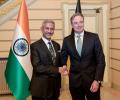
The era where nations thrived through rigid alignments is giving way to an age where the connective State defines power. For India, that era has arrived, points out Dr Nishakant Ojha.
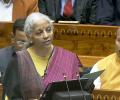
Budget 2026 sticks to fiscal discipline, shuns populist measures despite five key state elections coming up, but ends up rattling stock markets with a higher transaction tax on derivatives trading.

The fiscal tilt towards capex benefits companies in investment-related sectors like capital goods, defence equipment, engineering & construction and metal & mining. The planned cut in revenue expenditure will weigh on companies in consumption sectors like FMCG, consumer durables and retail.

Under the defence partnership, India and the UAE are eyeing defence industrial collaboration and cooperation in advanced technologies, cyberspace training, special operations, interoperability of their militaries and counter terrorism.

Activity in the corporate bond market is set to gain momentum following a 25-bp policy repo rate cut by the rate-setting panel of the Reserve Bank of India (RBI). State-owned public cebPower Finance Corporation (PFC) and Small Industries Development Bank of India (Sidbi) are planning to raise up to Rs 11,500 crore through bonds on Tuesday as issuers expect borrowing costs to ease.
The Indian economy is likely to grow at 7.4 per cent in 2025-26, up from 6.5 per cent in the previous fiscal, mainly on account of better performance of manufacturing and services sectors, as per the government data released on Wednesday.

'This Budget has a one-year agenda, which you can call the sprint, and the marathon is towards Viksit Bharat.'

Ahead of the Reserve Bank of India's (RBI's) monetary policy review in the first week of December, major public sector non-banking financial companies (NBFCs) - the National Bank for Agriculture and Rural Development (Nabard), Small Industries Development Bank of India (Sidbi), Power Finance Corporation (PFC), and Indian Railway Finance Corporation (IRFC) - plan to raise up to Rs 24,000 crore together through bond issuancesk.

On his 200th birth anniversary, Utkarsh Mishra traces the life, thought, and legacy of Dadabhai Naoroji, the Grand Old Man of India.

'Our problem is not a budget deficit but a trust deficit. We need to trust our institutions and industries to innovate and lead. That is the way forward for India.'
